If you’re planning to replace the flooring in your Melbourne home, it helps to understand what you’re paying for before choosing a product.
In this guide, we’ll look at the cost of hybrid flooring, what installation can add to your budget, and what may affect your final quote.
What Is Hybrid Flooring?
Hybrid flooring is a popular choice for homeowners who want the appearance of timber without the same level of upkeep. It combines a hard-wearing surface with a rigid core, making it suitable for many high-traffic areas in a home.
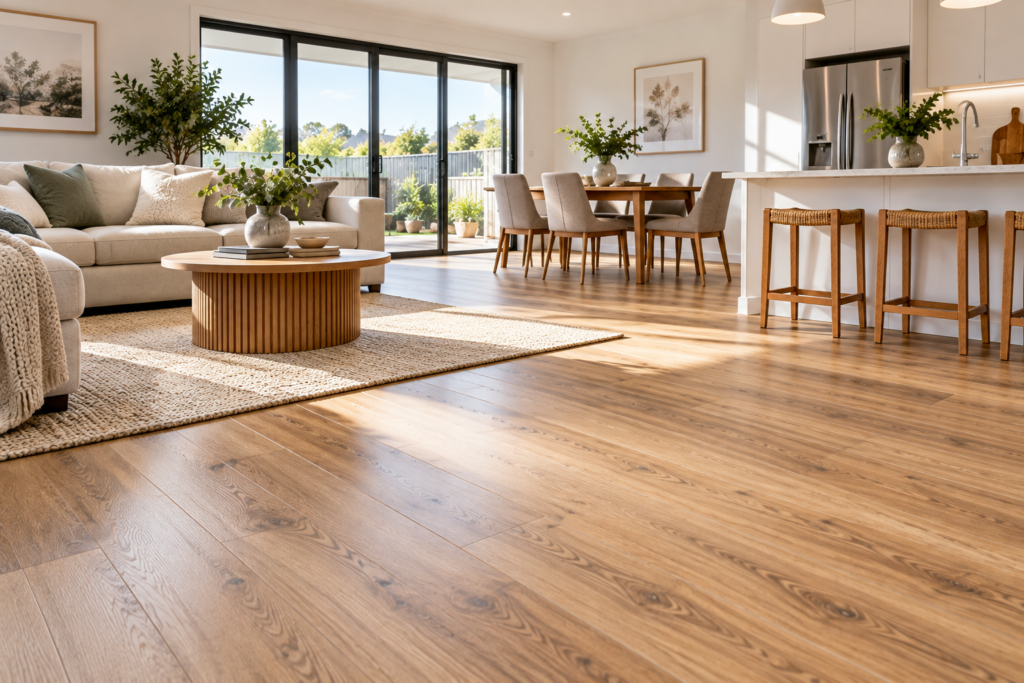
Average Cost of Hybrid Flooring per m² in Melbourne
Hybrid flooring prices depend on the product you choose. Entry-level boards are generally more affordable, while premium ranges may offer different finishes, construction features and warranty terms.
Flooring Type | Expected Cost per m² |
| Budget hybrid flooring | $30–$45 |
| Mid-range hybrid flooring | $45–$70 |
| Premium hybrid flooring | $70–$100+ |
*These are indicative material-only prices. Actual prices depend on the supplier, product range and current availability.
When comparing two products, don’t look at price alone. Check the wear layer, construction, finish and warranty to understand what you’re getting for your money. A less expensive board may be perfectly suitable for a spare bedroom, while a busy living area might call for a product with different performance features.
How Much Does Hybrid Flooring Installation Cost?
A straightforward room with a suitable subfloor will generally cost less to install than a home with uneven floors, several small rooms or a complicated layout.
Installation Type | Average Cost per m² |
| Basic installation | $25–$40 per m² |
| Complex layouts | $40–$60+ per m² |
| Stair installation | Quoted individually |
*Installation costs vary based on site conditions, the installer, and the scope of work.
What Can Increase the Installation Price?
- Removing existing carpet, tiles or other flooring
- Levelling an uneven subfloor
- Moving furniture before installation
- Working around kitchen islands, doorways and unusual room shapes
- Installing trims, scotia or transition strips
- Flooring stairs or areas that require additional cutting
For example, if your existing floor needs levelling, you may need to complete that work before installing hybrid boards. Ask for an itemised quote so you know what’s included and what may be charged separately.
What Would Hybrid Flooring Cost for a 50 m² Home?
Per-square-metre prices are useful, but most homeowners want to know what the flooring might cost for an actual room or home. Let’s say you’re replacing 50 m² of flooring and choose a mid-range hybrid product with a straightforward installation.
Expense | Estimated Cost |
| Mid-range hybrid flooring: 50 m² × $45–$70 | $2,250–$3,500 |
| Basic installation: 50 m² × $25–$40 | $1,250–$2,000 |
Estimated total | $3,500–$5,500 |
What Affects the Price of Hybrid Flooring?
Two hybrid boards can look similar in a photograph but have different specifications and prices. Here are a few details to check before deciding.
Board Thickness and Construction
Hybrid flooring comes in different thicknesses and core constructions. A thicker board may feel different underfoot, but thickness alone doesn’t tell you how durable the flooring will be. The core, wear layer and overall product quality also matter.
Wear Layer
Finish and Colour
Water Resistance
Hybrid Flooring vs Laminate Flooring: Which Costs More?
Laminate is generally the more affordable option in many product ranges, although premium laminate can cost more than entry-level hybrid flooring.
Material cost | Often higher | Often lower |
Timber-look finishes | Available | Available |
Scratch resistance | Depends on product | Depends on product |
Everyday moisture resistance | Generally strong | Varies by product |
Maintenance | Easy to clean | Easy to clean |
Installation cost | Depends on site and product | Depends on site and product |
Is Hybrid Flooring Worth the Cost?
For many households, hybrid flooring is worth considering because it doesn’t demand much attention once it’s installed. You can sweep or vacuum it as part of your usual cleaning routine, and most everyday spills are easy to clean up. It also gives you plenty of choice in appearance.
Whether you prefer a light timber finish or something darker, options suit different interiors. That said, you don’t need to buy the most expensive board available just because it’s labelled premium. A well-chosen mid-range product may be entirely suitable for your home. What matters is finding flooring that suits the room, your household and your budget.
Where Does Hybrid Flooring Work Best?
You can use hybrid flooring in many areas of the home, as long as the chosen product is approved for the intended space. Common choices include Living rooms, Kitchens, Dining areas, Hallways, Bedrooms, and home offices. If you’re renovating an open-plan home, using the same flooring across connected rooms can also help create a consistent look.
Choosing the Right Flooring Supplier in Hoppers Crossing
Before you decide, visit a showroom if you can. Look at the available colours, compare finishes, and ask about products that suit your home. It’s also worth checking what the quote includes.
Does the price cover installation? Will the existing flooring need to be removed? Are trims and floor preparation included? What warranty applies to the product? Sorting these details before the work begins can prevent confusion later.
Our flooring store in Hoppers Crossing offers hybrid, herringbone hybrid and laminate flooring for homeowners across Melbourne’s west, including Truganina, Tarneit and Werribee.
Final Thoughts
Hybrid flooring prices can vary quite a bit, so it’s worth comparing more than the cost of the boards. As a starting point, the indicative material prices in this guide range from $30 to $100+ per m², with installation adding approximately $25 to $60+ per m², depending on the work involved. Your final cost will depend on the product, room size, existing floor condition and any preparation needed before installation.